
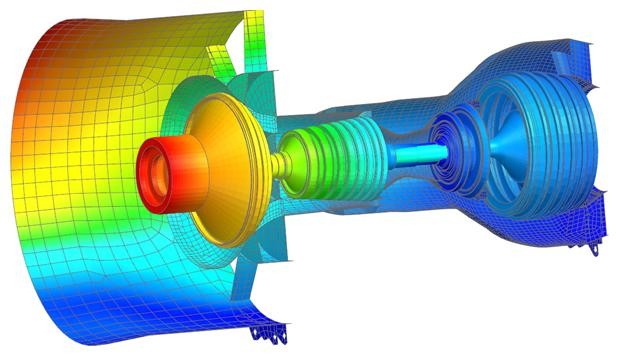
CAE, or Computer-Aided Engineering, is a crucial concept in the field of mechanical engineering. It refers to the use of computer software and simulation tools to analyze, validate, and optimize mechanical designs and engineering processes. CAE encompasses a wide range of simulation and analysis techniques that help engineers make informed decisions, improve product performance, and reduce development costs. Here are some key aspects of CAE in mechanical engineering:
- Simulation Types: CAE includes various types of simulations, such as finite element analysis (FEA) for structural analysis, computational fluid dynamics (CFD) for fluid flow analysis, thermal analysis, electromagnetic analysis, and more. Each type of simulation focuses on specific aspects of mechanical systems.
- Design Validation: CAE allows engineers to assess the behavior of a mechanical component or system under different operating conditions, loads, and environmental factors. This helps validate the design’s integrity and performance before physical prototypes are built.
- Optimization: CAE tools enable engineers to explore design alternatives and optimize mechanical systems for factors like strength, weight, cost, and efficiency. Optimization studies can help find the best design configuration within specified constraints.
- Stress Analysis: Finite element analysis (FEA) within CAE is commonly used to analyze stress and strain distributions in mechanical structures. This helps ensure that components can withstand expected loads without failure.
- Vibration Analysis: CAE can simulate and analyze mechanical vibrations to assess a system’s dynamic behavior and resonance frequencies. This is crucial for designing structures that minimize vibrations and noise.
- Fluid Dynamics: Computational fluid dynamics (CFD) simulations are used to study fluid flow patterns, heat transfer, and pressure distributions within mechanical systems. This is vital for designing efficient HVAC systems, engines, and aerodynamic components.
- Thermal Analysis: CAE tools can simulate heat transfer and temperature distribution in mechanical systems. Engineers use this to optimize cooling solutions and ensure components operate within temperature limits.
- Electromagnetic Analysis: In electrical and electromechanical systems, CAE can analyze electromagnetic fields and interactions. This is essential for designing components like motors, transformers, and sensors.
- Multi-physics Simulations: Some CAE software can handle multi-physics simulations, which involve the interaction of multiple physical phenomena (e.g., structural, thermal, and fluid dynamics). This is particularly useful in complex engineering systems.
- Risk Reduction: CAE allows engineers to identify and address potential design flaws early in the development process. This reduces the risk of costly errors and design changes later in the project timeline.
- Cost and Time Savings: By using CAE, engineers can conduct virtual tests and simulations, reducing the need for physical prototypes and extensive testing. This results in significant cost and time savings during product development.
- Iterative Design: CAE supports an iterative design approach, enabling engineers to refine designs quickly and efficiently based on simulation results and performance feedback.
In summary, CAE is a powerful tool that empowers mechanical engineers to analyze, optimize, and validate their designs and systems in a virtual environment. It helps ensure that mechanical products are reliable, efficient, and cost-effective while reducing the time and resources required for physical testing and prototyping.